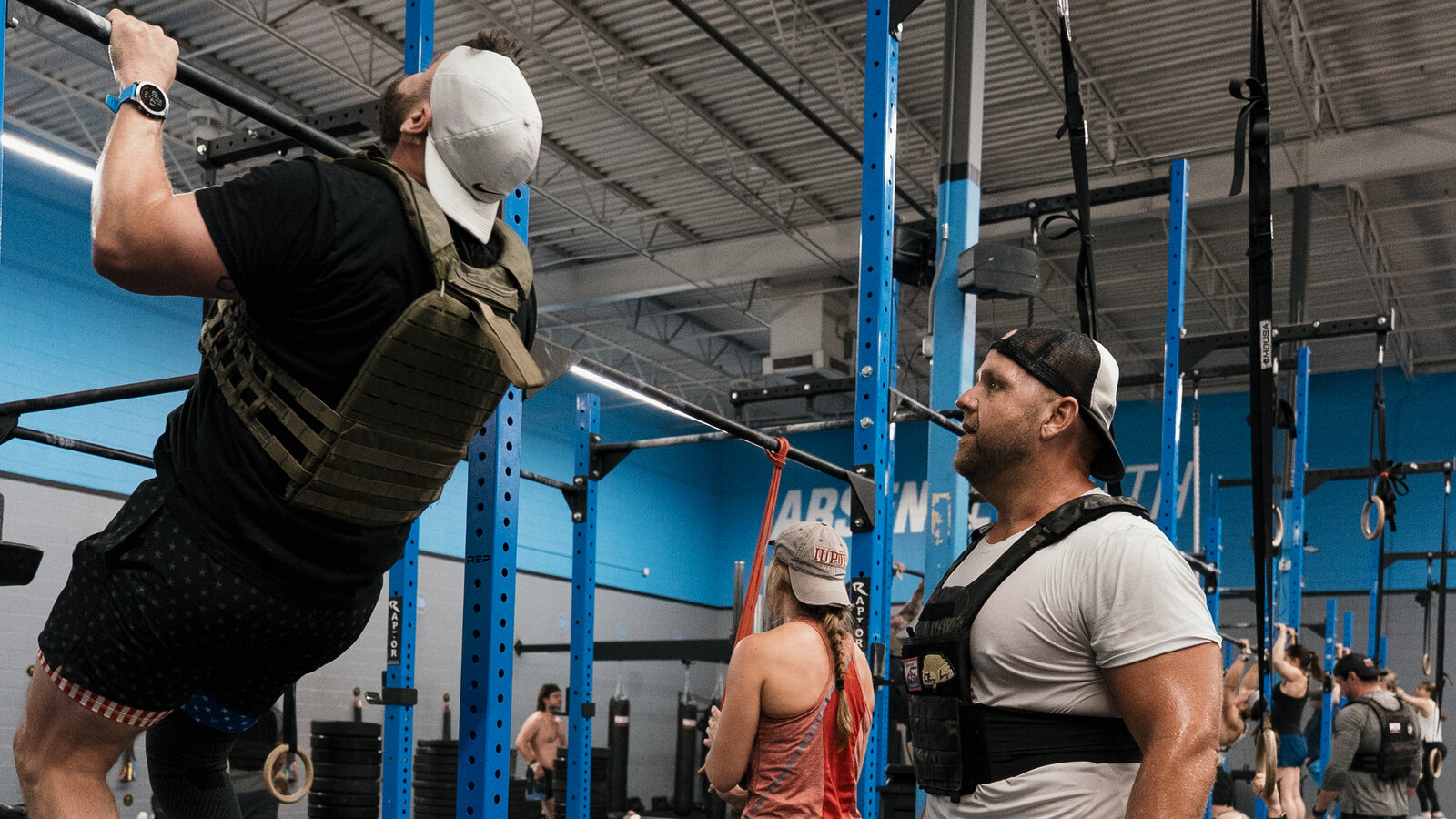
Why Shoulder Pain Hits Denver's Active Population Harder
Denver's outdoor lifestyle puts unique stress on shoulders. Skiing and snowboarding cause repeated overhead strain and fall impacts. Rock climbers face high rates of impingement, rotator cuff strains, and bicep tendinopathy — shoulder injuries make up about 17% of climbing injuries. Mountain bikers endure long hours absorbing trail vibration through their arms and shoulders.
At 5,280 feet, Denver's altitude speeds dehydration by up to 40%, increasing fatigue and risk of overuse injuries during shoulder recovery.
Most people respond by either stopping training or pushing through pain — both harmful:
- Stopping leads to weaker stabilizers, tighter joint capsules, and reduced shoulder blade motion.
- Pushing through pain causes compensations: neck takes over, upper back tightens, and opposite shoulder strains.
The real problem is the gap between physical therapy and full training. PT handles rehab, but few programs bridge the return to pain-free performance. Arsenal Health's personal training fills that gap with custom programs backed by on-site medical support.
What Sets Arsenal Health Apart for Shoulder Pain Training
At Arsenal Health, shoulder pain training is built on movement that combines assessment-driven strengthening exercises with on-site medical support and recovery to reduce muscle soreness.
The Arsenal Movement Assessment
Every shoulder pain program starts with the Arsenal Movement Assessment. It screens your compensatory patterns, identifies the range of motion limits, and maps pain triggers specific to your shoulder. The Arsenal InBody body composition scan establishes baseline metrics, so progress is measured by data, not guesswork.
The training program is built from this assessment, not a generic shoulder protocol pulled from a template. Your rotator cuff, scapular stability, and pain-free range all shape the strengthening exercises you do, so every rep serves your shoulder's recovery and long-term function.
Medical Team Under the Same Roof
Arsenal Health puts personal training, medical care, and recovery all in the same convenient location. Dr. David Wiebe (MD, Medical Director), Jenny Reichenauer (RN, BSN, CEN), and Noel Kiley (PA) are on-site. If your shoulder needs imaging, a clinical evaluation, or regenerative medicine like PRP or A2M therapy, you can get it in the same building where you train.
No referral is needed, so you can simply book directly. Our A4M- and IPS-certified team has over 125 years of combined clinical experience treating active adults and athletes with shoulder pain.
Recovery Center to Accelerate Shoulder Healing
When you train with Arsenal Health, you also get access to our top-of-the-line recovery center. Cold plunge, dry sauna, and red light therapy all help reduce muscle soreness, support tissue repair, and bring blood flow to recovering joints. Cold plunge reduces inflammation. SISU dry sauna increases circulation to damaged tissue. Red light therapy supports cellular repair. All three are available on site and accessible with your membership, not add-ons you book separately.
Medical team on-site · 3,200+ recovery sessions delivered · Free consultation
Shoulder Pain Training Across Denver, Arvada, and the Front Range
With two central locations, Arsenal Health serves clients across the Denver metro:
- Arvada: 5450 Wadsworth Bypass STE B, Arvada, CO 80002
- DTC / Englewood: 80 Inverness Dr E Ste B, Englewood, CO 80112
- RiNo, Baker, Platt Park, Country Club, City Park
- LoDo, Five Points, South Broadway
- Greenwood Village, Highlands Ranch, Centennial
- 24/7 member access at both locations
How Shoulder Pain Training Works at Arsenal Health
We turn shoulder pain into progress with a clear, data-driven process and medical support. Here's how it works:
1. Free Consultation and Movement Assessment
Discuss your shoulder history, pain patterns, and goals. The Arsenal Movement Assessment screens your movement for compensatory patterns and range of motion limits specific to your condition.
2. Custom Training Program Built Around Your Shoulder
We design a personalized treatment plan from your assessment data. Exercises are selected for your specific shoulder condition, pain-free range, and return-to-activity goals. Progressive overload is planned from day one.
3. Progressive Training With Ongoing Adjustments
Scapular stability work, rotator cuff strengthening, and external rotation drills are built into every session. Your coach adjusts intensity, volume, and exercise selection as your shoulder responds.
4. Recovery and Medical Support When Needed
Cold plunge, sauna, and red light therapy are available between sessions. If your shoulder needs clinical attention, such as imaging, regenerative medicine, or a medical evaluation, the team is in the same building.
Common Shoulder Pain Training Questions Denver Clients Ask
Can I train with shoulder pain, or should you wait until it's gone?
Yes, you can train if the program respects your pain-free range. Using lightweight and proper technique helps protect the shoulder joint while keeping stabilizers active. Avoiding all exercise weakens the rotator cuff and can extend recovery from chronic pain.
What's the difference between personal training and physical therapist care for shoulder pain?
A physical therapist diagnoses and manages rehab, while personal training builds strength and control for daily life and sport. At Arsenal Health, your trainer and physical therapist coordinate so your program supports both healing and functional return.
How does Denver's altitude affect shoulder injury recovery?
At 5,280 feet, your body loses fluids faster, which can increase fatigue and slow tissue repair. Shoulder programs adjust intensity and volume, especially during the first few weeks, to reduce strain on the rotator cuff and joint while you heal.
How long does it typically take to see results?
Most clients notice meaningful improvement in pain and range of motion within a few weeks of consistent training. For many, the first 4–6 weeks show better comfort in pressing movements and daily activities. Full progress often continues through the 12-week timeline.
What shoulder conditions do your trainers work with?
We work with rotator cuff strains, shoulder impingement, frozen shoulder, labral tears, post-surgical rehab, chronic pain, and general instability. Programs are tailored to your diagnosis, including how to protect an internal rotation-limited or torn rotator cuff during one-arm work.
Do I need a doctor's referral to start?
No referral needed. You can book a consultation directly. We'll decide whether personal training, a medical evaluation, or both is the right first step. If clinical care is recommended, our on-site team handles it without extra steps.
How do you modify pressing movements for painful shoulders?
We adjust pressing movements by reducing the range of motion, using light weight, and focusing on the neutral spine and shoulder blades. In push-up position, we often regress to wall or knee push-ups, or use one-arm scaled variations that avoid internal rotation pain.
When should I see a physical therapist instead of only training?
If you have sharp pain, significant weakness, or a known torn rotator cuff, a physical therapist should evaluate you first. Their guidance helps shape your training so pressing movements and pushing exercises protect the shoulder joint and reduce chronic pain.
Can strengthening exercises help if I already have chronic pain?
Yes. Strengthening exercises that respect your pain-free range can improve joint stability and reduce chronic pain over time. Properly cued scapular work and light-weight pressing progressions help the shoulder joint move smoothly and safely.
What Denver Members Say About Training at Arsenal Health
Had a lot of tightness in my neck and shoulders and Zak's massage was life changing. He helped me feel better instantly and gave me helpful tips to use at home if the tightness came back. Highly recommend - he knows sooo much about the body and his knowledge always amazes me!
- Shelby Bell
These guys are awesome! Very careful to make sure your form is perfect to prevent injury. Onsite PT if you are like me and accident prone. Once covid goes away or improves to the point where I feel comfortable going to back to the gym I'm definitely going back here.
- Jean Kilpatrick
This is a great place to become strong! Family friendly environment but does not compromise on training. The coaches pay careful attention to all athletes. There is a high degree of emphasis on staying safe and avoiding injury.
- Jennifer Arroyo
I started training at Arsenal in November 2023 after Yoshi recruited me in. I encountered a back injury while on vacation and Yoshi delicately worked me in the recovery center to stay active but nurture my back. Now that I am back to health, I do Personal Training with Yoshi with open dialogue on my fitness/health goals. I am also doing the Fit/Pump classes 3 days a week, so I get to work with multiple of the trainers.
- Tommy Poeschi