To find a good personal trainer in Denver, evaluate clinical infrastructure first, not just certifications. The trainers producing lasting results in 2026 pair NCCA-accredited credentials with structured intake assessments, body composition tracking, and measurable 8-12 week roadmaps tied to your specific goals. If you are still weighing the investment, read are personal trainers worth it and can ChatGPT be a personal trainer. Arvada clients can also start with personal training in Arvada.
Denver's 16.5 gyms per 100k residents and 2,200+ statewide facilities create serious noise. This guide cuts through it with a step-by-step framework covering how to define measurable outcomes, what separates baseline credentials from clinical-grade coaching, red and green flags to watch during consults, real 2026 pricing benchmarks, and a 30-day shortlisting process to land the right fit fast.
You'll discover answers to questions like:
- What should you really look for in a personal trainer beyond certifications and price?
- How can you ensure a trainer's approach matches your individual fitness goals?
- What are the typical costs, and what's included in Denver personal training sessions?
- How do clinical assessments and progress tracking improve your results?
- What red flags and green flags should you look out for to help you choose the perfect fit?
Key Takeaways
- Personal training sessions in Denver range between $80–$150 (1-on-1 experienced) and $45–$75 (semi-private) in 2026. Compare what's bundled, not just hourly rates.
- Colorado ranks as the #4 fittest state in the U.S. (Feb 2026) with abundant gyms, but market noise makes finding serious coaching tough.
- Supervised training beats apps and self-directed sessions for muscle gains, strength, and adherence.
- NCCA-accredited trainers master functional anatomy (32%), assessment (30%), and program design (28%) — skills that uncertified trainers often skip.
- Great trainers deliver thorough intakes, clear 8–12 week roadmaps, clinical collaboration, and environments with InBody/recovery tools.
Why Finding a Great Personal Trainer in Denver Feels Hard (Even When You've Hired One Before)
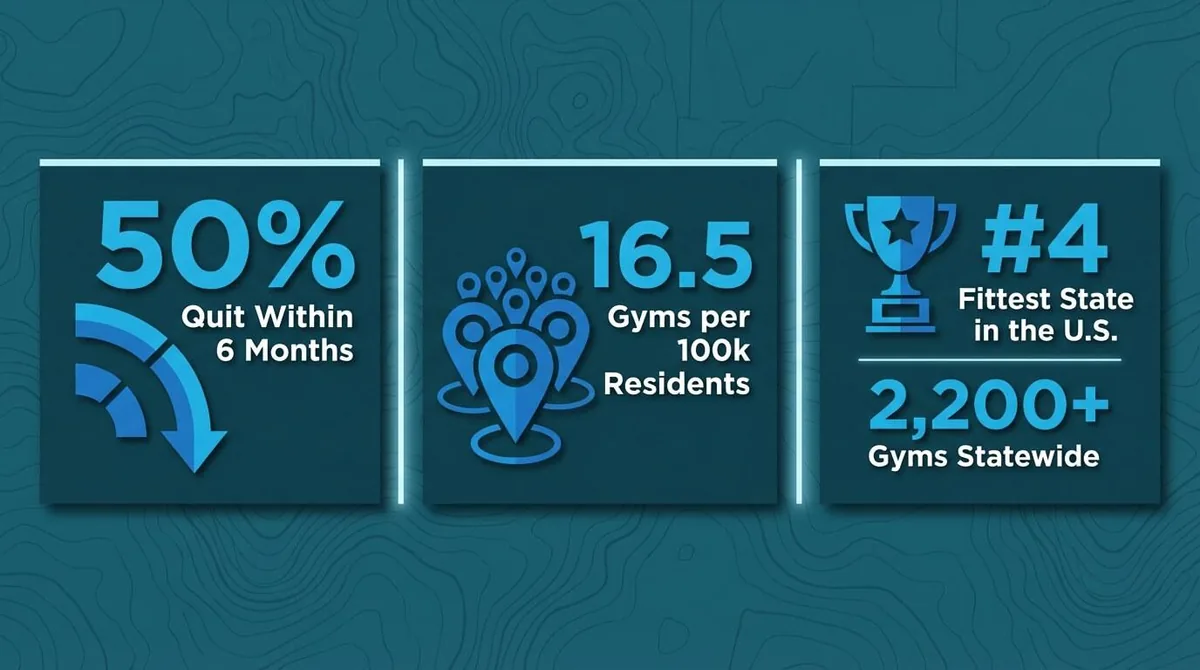
Roughly 50% of gym members quit structured programs within six months due to stalled body composition and declining motivation — a pattern amplified in Denver's high-choice market, where neighborhoods like LoHi and DTC each offer dozens of coaching options. The issue is rarely effort; most plateaued clients are training consistently but following generic programming that ignores altitude adaptation, seasonal activity shifts, and individual biomarkers.
Here are the facts about Denver's fitness scene:
- Abundant Options: Denver's gym density of 16.5 per 100k residents means access is not the issue.
- Active Culture: Colorado ranks as the #4 fittest state in the U.S. according to America's Health Rankings (2025–2026 data) and the least obese state, meaning residents are exercising outside of work.
- Market Noise: Over 2,200 gyms statewide make it difficult to separate serious coaching from generic rep-counting.
Arsenal Health's hormone panels and functional biomarker testing (Hormone Health at $250, Comprehensive Functional at $550) surface these barriers before months of frustrated effort.
Step 1: What Should "Results" Actually Mean for You in Denver's Fitness Culture?
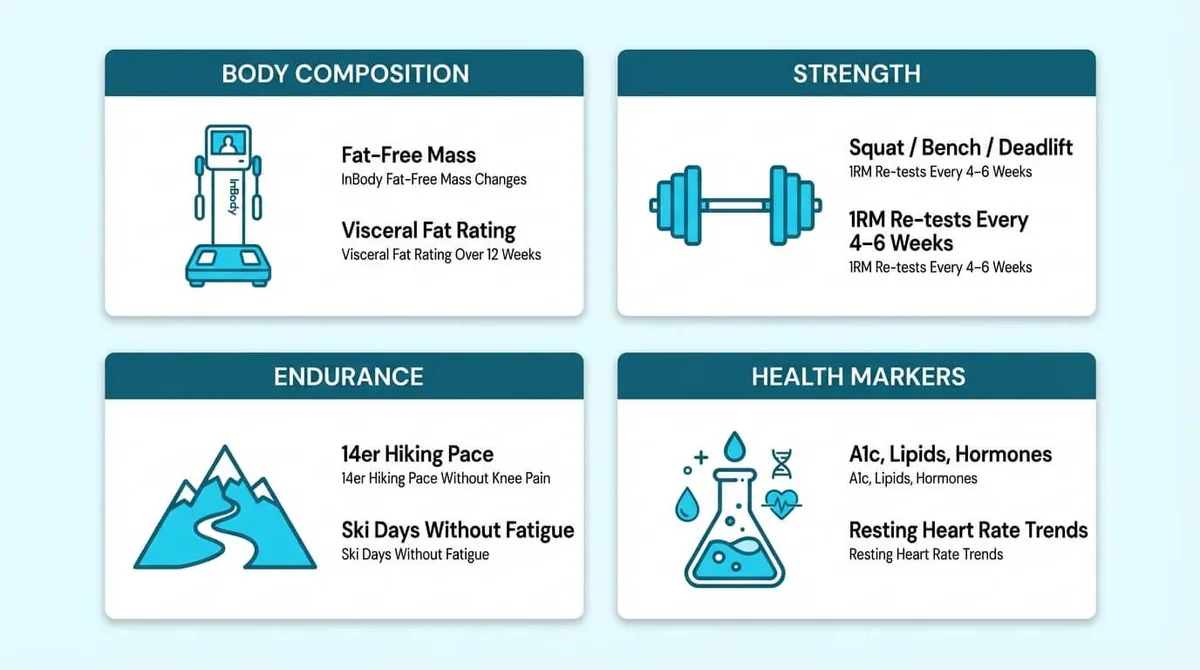
Defining outcomes around body composition, strength benchmarks, and biomarkers before selecting a trainer prevents months of misdirected effort, and pairing training with IV therapy to support recovery capacity and biomarkers addresses the clinical barriers that generic programming cannot.
Define your outcomes before evaluating any trainer:
- Body composition: InBody fat-free mass changes, visceral fat rating over 12 weeks.
- Strength: Squat, bench, deadlift numbers with estimated 1RM re-tests every 4–6 weeks.
- Endurance: 14er hiking pace without knee pain, ski days without intense fatigue.
- Health markers: A1c, lipids, hormones, resting heart rate trends.
Structured accountability outperforms willpower alone. Trainers who schedule biweekly InBody scans and quarterly 1RM re-tests keep clients on track through Denver's seasonal shifts — ski season deloads, summer hiking ramp-ups, and altitude-adjusted recovery windows that demand programming flexibility, not just motivation. A good trainer should explain to you, both verbally and in writing, how they'll measure progress against your outcomes over 8–12 weeks.
Step 2: Why Should You Look Beyond Certifications When Choosing a Personal Trainer?
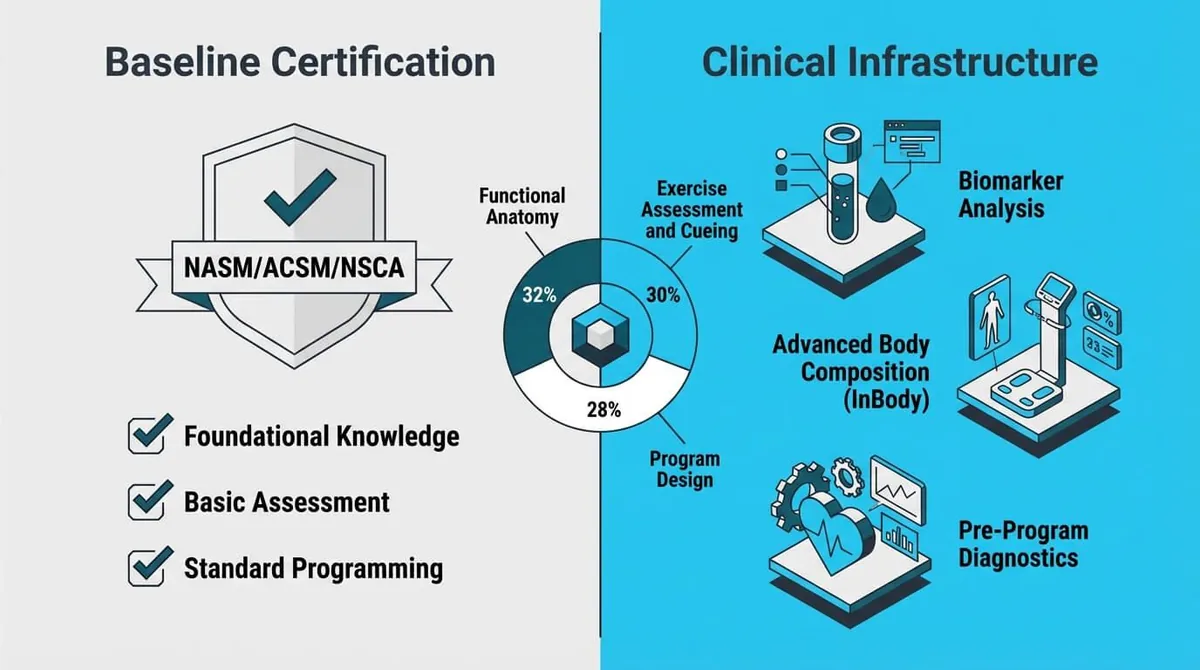
NASM, ACSM, and NSCA certifications still matter. NASM CPT is NCCA-accredited and trusted by 1.9M+ professionals globally. But in Denver's saturated market, credentials are the baseline, not the differentiator. Common certifications for personal trainers in Denver include Certified Personal Trainer (CPT), Certified Women's Fitness Specialist (WFS), and Certified Weight Loss Specialist (WLS).
What separates good personal training services from great ones is clinical infrastructure:
- Biomarker Analysis: Integrated lab testing for hormones and thyroid panels to identify physiological barriers.
- Advanced Body Composition: Precision scanning, such as InBody, to track fat-free mass and visceral fat changes.
- Pre-Program Diagnostics: Structured movement assessments to ensure your personalized routine matches your current mobility and injury history.
Supervised training produces significantly greater muscle and strength gains than app-guided or self-directed programs, according to a 2025 Journal of Strength and Conditioning Research study. The coached group also showed far lower dropout rates, confirming that structured in-person accountability — not just better programming — drives long-term results. In Denver's altitude environment, where recovery demands are higher, real-time coaching adjustments matter even more than at sea level.
Lu & Leng's 2024 randomized trial adds a critical dimension: supervised training didn't just produce better strength and composition outcomes — it improved movement quality and form adherence, reducing injury risk compared to training with workout partners or solo. For Denver athletes who alternate between heavy lifting and high-impact outdoor sports, that form correction translates directly into fewer overuse injuries across seasons.
The pivotal difference between good training and great outcomes is clinical visibility. A certified trainer designs progressive programming, but only a clinically integrated facility identifies why that programming isn't working — a thyroid panel revealing subclinical hypothyroidism behind stalled fat loss, or an inflammatory marker explaining chronic fatigue despite adequate sleep. Arsenal Health's lab panels (Hormone Health at $250, Comprehensive Functional at $550) surface these barriers before months of frustrated effort.
Step 3: How Do You Spot a Real Intake Process vs. a Rushed Free Session?
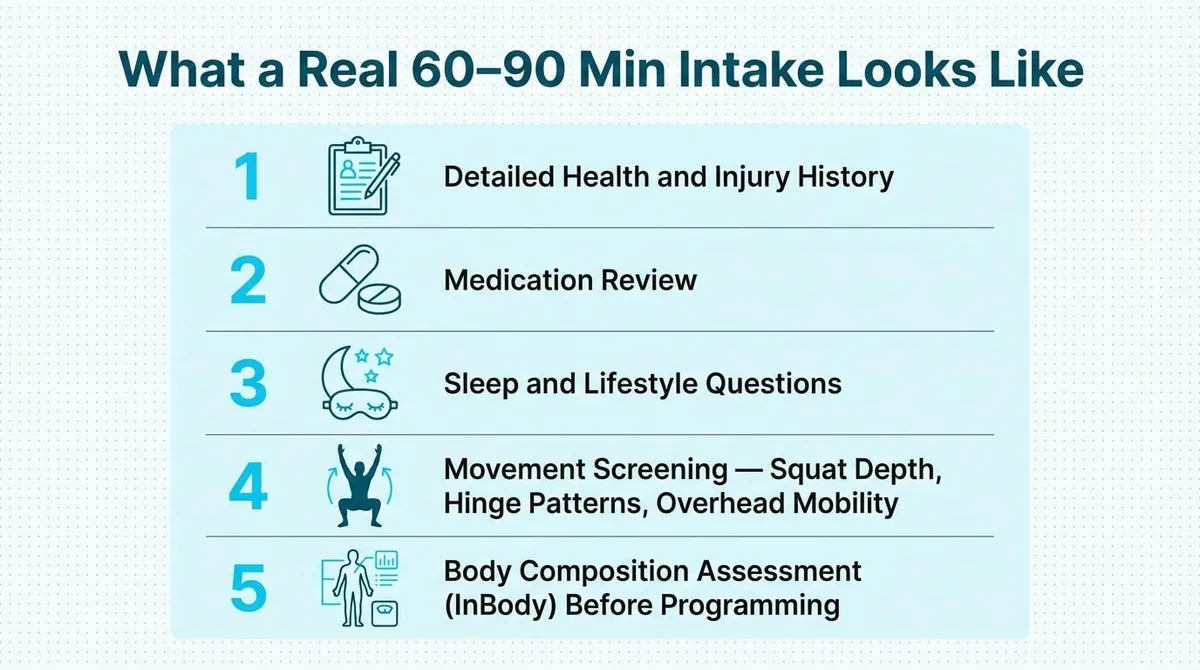
There's a difference between a rushed "free session" where you're dragged into a workout and a structured 60–90 minute intake that feels closer to a diagnostic appointment.
Look for these intake elements:
- Detailed health and injury history
- Medication review
- Sleep and lifestyle questions
- Movement screening (squat depth, hinge patterns, overhead mobility)
- Body composition assessment (InBody) before programming
Arsenal Health's coaching team, with 15+ years and 4,000+ clients trained, treats the intake the same way a physician treats a diagnostic workup — skipping it means programming blind. A Brookbush Institute meta-analysis of NCCA-accredited CPT exams confirms why: certified exam domains weight 32% functional anatomy, 30% exercise assessment and cueing, and 28% program design — core competencies that uncertified trainers are never tested on.
Denver's dominant activities demand sport-specific screening that generic intake forms miss. Backcountry skiing requires hip mobility and ACL stability baselines, trail running at altitude needs cardiac stress and VO2max estimates, and 14er preparation demands knee-tracking and ankle stability assessments. Trainers who skip these screens program blindly into injury-prone movement patterns.
Step 4: How Do Denver Personal Trainer Prices Compare by Format and What's Included?
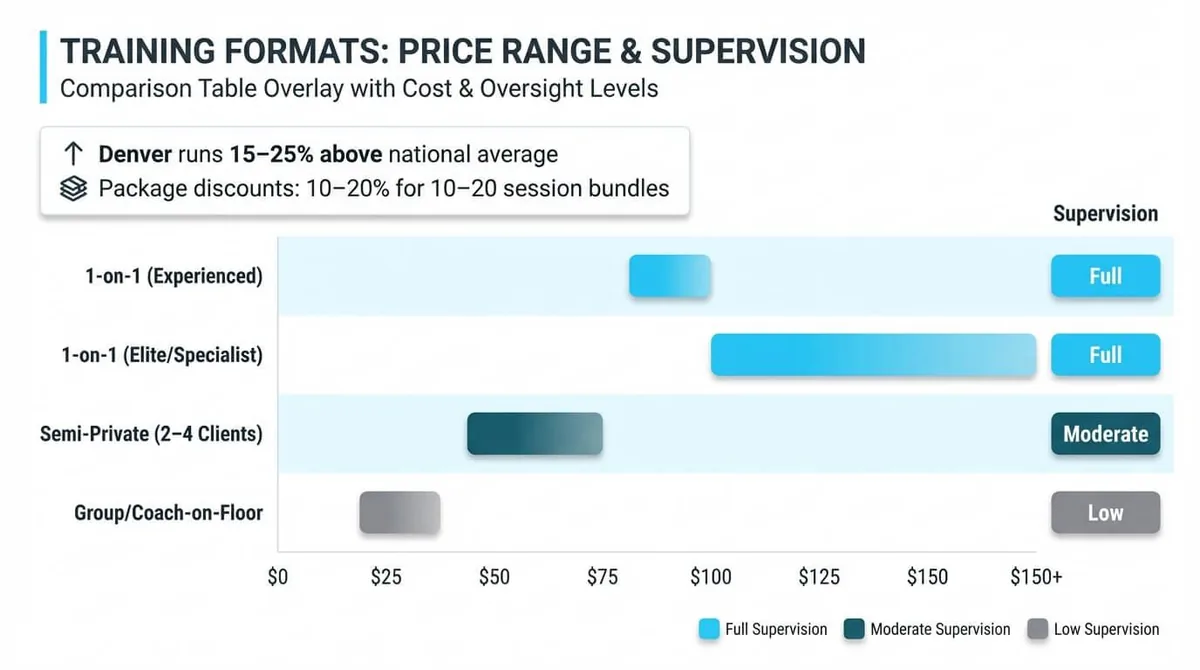
Denver personal training costs run 15–25% above the national average, reflecting the city's high cost of living and competitive fitness market. That premium is justified only when sessions bundle assessment, body composition tracking, and programming adjustments — not just supervised reps.
2026 Denver Pricing Expectations
| Format | Cost/Session | Supervision Level |
|---|---|---|
| 1-on-1 (experienced) | $80–$100 | Full |
| 1-on-1 (elite/specialist) | $100–$150+ | Full |
| Semi-private (2–4 clients) | $45–$75 | Moderate |
| Group/coach-on-floor | $20–$35 | Low |
Most gyms offer package discounts of 10% to 20% if you buy 10 or 20 sessions at once. Look for "Initial Packs" — it's much smarter to pick a place that bundles InBody scans and movement analysis into your first few sessions rather than choosing a cheaper gym that skips the assessment entirely.
Step 5: What Red Flags and Green Flags Should You Watch for in Denver Gyms?
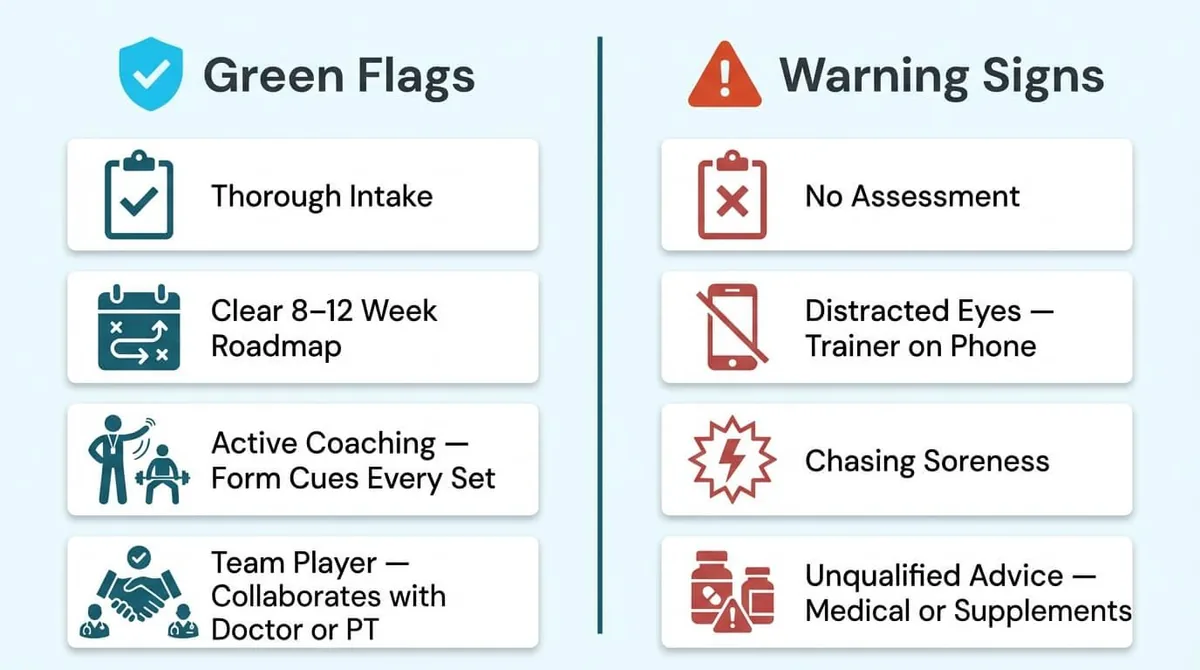
A trainer's in-session behavior predicts client outcomes more reliably than their certifications or marketing. Arsenal Health's data across 4,000+ trained clients shows that trainers who provide written session notes, real-time form cues, and structured progress reviews retain clients at significantly higher rates than those who wing it.
Signs of a Good Trainer
- Thorough Intake: They start with a deep dive into your history and give you written notes on your current fitness level.
- Clear Roadmap: You get a solid 8–12 week plan that shows exactly how you'll reach your specific goals.
- Active Coaching: They give you helpful form cues on every set to keep you safe and moving well.
- Team Player: They are happy to talk to your doctor or physical therapist to make sure your training is safe.
Warning Signs to Watch For
- No Assessment: They throw you straight into a hard workout without checking how you move first.
- Distracted Eyes: The trainer spends the session on their phone instead of watching your form.
- Chasing Soreness: They act like being unable to walk the next day is the only sign of a "good" workout.
- Unqualified Advice: They try to give medical or supplement advice that should really come from a doctor.
Being extremely sore (DOMS) doesn't mean you had a great session. It usually just means the workout was too much for your body to handle at once.
Step 6: What Questions Should You Ask During a Denver Trainer Consultation?
Price, schedule, and weight loss are the three questions every potential client asks — and none of them reveal coaching quality. These six questions expose how a trainer actually thinks about programming, data, and long-term results:
- How do you assess readiness for heavy lifting at altitude?
- How often do you reassess body composition or performance?
- How do you modify plans around ski or hiking seasons?
- Do you have access to or collaborate with medical professionals?
- How do you track progress (look out for InBody scans, 1RM tests, conditioning benchmarks)?
- What do you do if the data shows no improvement after 4–6 weeks?
Treat this meeting like an interview, not a sales pitch. Expect specific answers such as "We'll adjust volume and intensity using your biweekly InBody and strength data," not vague buzzwords like "we'll just push you."
Step 7: How Do You Know if a Denver Gym's Environment Matches Your Ambition?
In Denver, facility quality directly impacts training outcomes — a trainer limited to dumbbells and a treadmill delivers different results than one with access to power racks, InBody scanners, and recovery modalities.
Evaluate gym facilities against four equipment and recovery benchmarks before committing:
- Free weights, power racks, and barbells for progressive overload and building real strength over time.
- Open space for functional training, sled work, lunges, carries, and full-range movement patterns.
- InBody scanners or DEXA for precise body composition tracking every 2–4 weeks.
- Recovery tools like cold plunge, compression gear, infrared sauna, and contrast therapy to support high training frequency.
For active adults hitting plateaus, the smartest choice is a hybrid gym/clinic where trainers collaborate with physical therapists, review bloodwork, and adjust programming based on biomarkers like testosterone, inflammation markers, and recovery capacity. Think about the potential commute too — a location you can visit consistently beats the best programming you'll just end up skipping.
Step 8: How Do You Know When You Need More Than Just a Personal Trainer?
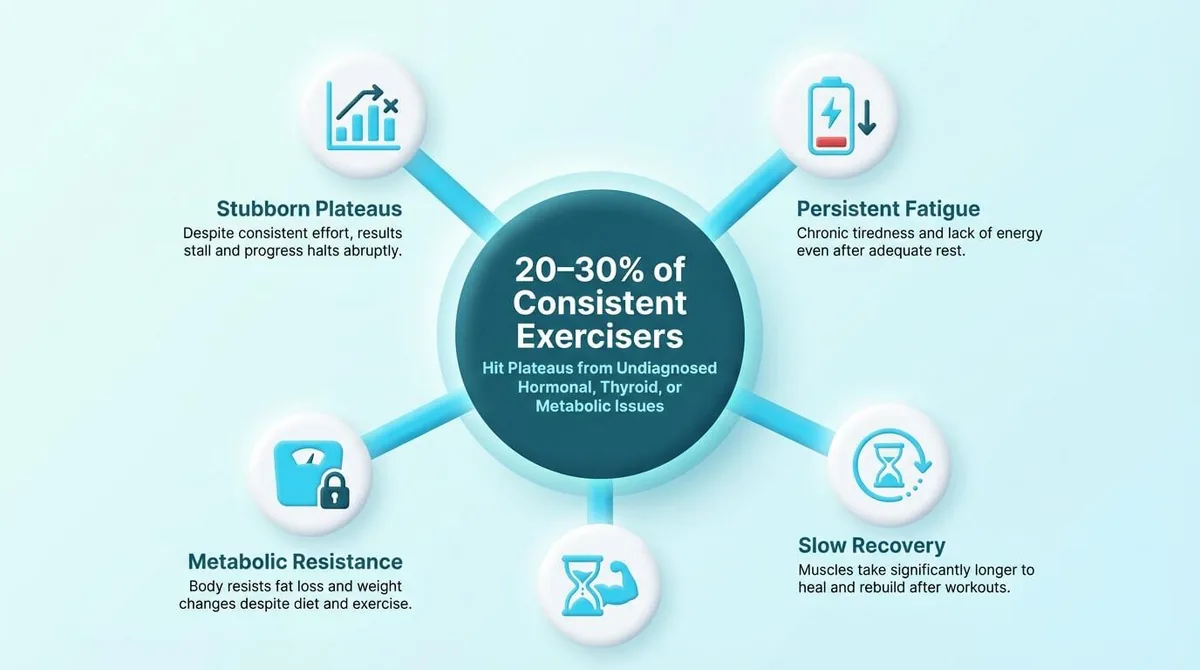
If you're a Denver fitness enthusiast training hard but still struggling with low energy, poor sleep, or stubborn body fat, the missing piece isn't more volume. An estimated 20–30% of consistent exercisers hit plateaus caused by undiagnosed hormonal, thyroid, or metabolic issues that no workout program addresses — these require clinical investigation, not more sets.
Signs You Need Clinically Integrated Personal Training Services
- Stubborn Plateaus: Your progress has completely stalled for months despite consistent effort and perfect adherence to your program.
- Persistent Fatigue: You feel chronically drained or "wired but tired," suggesting your nervous system or hormones aren't recovering.
- Slow Recovery: Muscle soreness lasts too long, or you feel physically beat down by workouts that used to feel manageable.
- Metabolic Resistance: You have extreme difficulty losing fat or building lean muscle despite eating clean and hitting your macros.
Lab testing (hormones, thyroid, metabolic markers) and detailed body composition tracking can reveal issues that tailored programs alone cannot fix. Trainers handle programming and movement; medical input handles pinpointing conditions. If this sounds familiar, it's time to raise your standard from "good trainer" to "clinically backed training environment."
How to Shortlist and Test Trainers in Denver in 30 Days
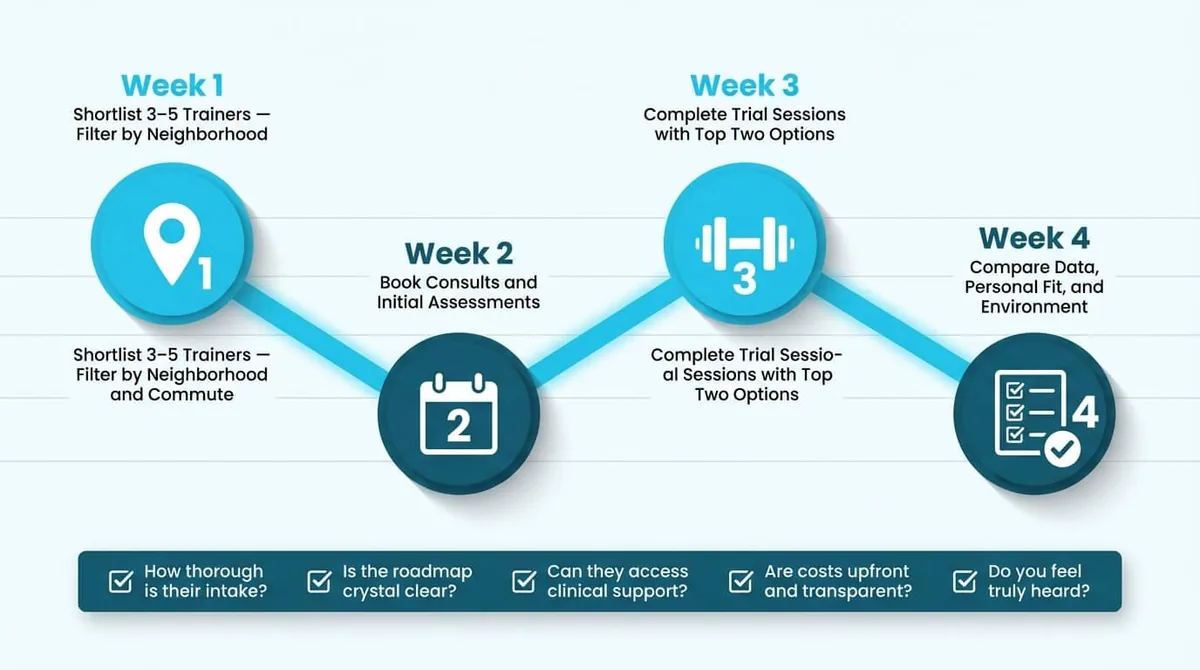
Move from research to action with this proven 4-week framework to land the right trainer fast:
- Week 1: Build a shortlist of 3–5 trainers/facilities filtered by neighborhood (LoHi, RiNo, Wash Park, Cherry Creek, DTC) and commute.
- Week 2: Book consults and initial assessments.
- Week 3: Complete trial sessions with your top two options.
- Week 4: Compare data, personal fit, and environment.
Here's what to watch for before making a final decision:
- How thorough is their intake?
- Is the roadmap crystal clear?
- Can they access clinical support?
- Are costs upfront and transparent?
- Do you feel truly heard?
Your fitness journey deserves expert guidance that matches your ambition, and taking 30 focused days now saves you months of spinning wheels with the wrong fit.
Conclusion
Finding a good personal trainer in Denver takes more than checking certifications or comparing hourly rates. Start with your goals, health history, and life balance first. Great trainers kick off with a solid intake, then build your training routine with smart programming and objective progress tracking — a combination that builds functional strength and drives real transformation.
At Arsenal Health in Denver, you get an all-in-one setup where personal training, medical testing, and recovery tools fit under one roof. With locations in Arvada and DTC/Englewood, you can stay consistent with a plan that tracks your body, your health, and your progress over time.
FAQ
How much should I expect to pay for a good personal trainer in Denver in 2026?
Expect $80–$150 per 60-minute 1-on-1 session depending on experience, or $45–$75 for semi-private. Package deals (10–20 sessions) typically offer 10–20% savings. Higher rates are justified when they include thorough assessments, body composition testing, and clinical access — just like the medically integrated model at Arsenal Health. Compare what's bundled, not just hourly rates.
Are personal trainers in Denver worth it if I already know how to lift?
Yes — especially for plateaued lifters juggling skiing, hiking, and long workweeks. Research shows supervised training produced greater strength and fat-free mass gains versus self-guided programs. A good trainer adds value through load management across seasons, sports performance optimization, and aligning lifting with outdoor goals.
How long should I work with a trainer before expecting visible results?
Most committed clients see measurable changes in 6–8 weeks, with significant transformations over 3–6 months. Your trainer should define checkpoints — InBody scans every 4–6 weeks, performance re-tests. If nothing improves after 6–8 weeks with good adherence, revisit the plan or consider deeper labs.
Can I get the same results with online coaching instead of in-person training?
Online coaching works for disciplined, injury-free lifters who move well. However, research shows supervised training outperforms remote options for strength and composition. Online coaching lacks real-time form correction. Consider it a supplement to — not a replacement for — initial in-person work in a clinically supported environment.
How do I know if a trainer is qualified to help with my past injury or medical condition?
Look for trainers with corrective specializations (NASM-CES) and clear processes for collaborating with physical therapy providers or physicians. Trainers should never diagnose or alter medications. Those with complex histories (back surgery, cardiac issues) should prioritize facilities where medical and training teams are integrated for safe progression.